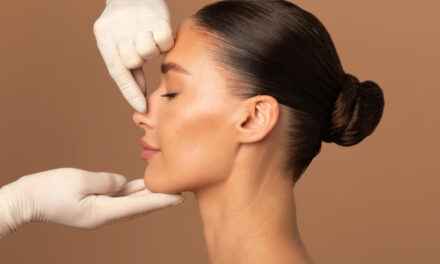
Few people ask whether a rhinoplasty candidate is “good enough” for surgery; they ask whether their own nose, age, habits and hopes fit a procedure that rearranges bone, cartilage and skin in a very small space. That question cannot be answered by a quiz or a web page. It is answered by a surgeon who has examined the inside and outside of the nose, listened to the goals and looked at what the rest of the medical history adds.
This article opens up that evaluation so you can walk into it prepared. It explains six checks surgeons commonly work through, what published sources say about each, and where the evidence is thinner than patient brochures suggest. It is education, not a verdict on any individual. Costs, healing and complications have their own pages, linked where they matter.
How surgeons decide who is a rhinoplasty candidate, and why a web page cannot
Nose surgery is described by the Mayo Clinic’s patient page as a difficult operation because small structural changes show on the face and swelling can hide the result for months. That difficulty is the reason the evaluation is not a formality. The surgeon is judging whether the plan, the anatomy and the person line up well enough to proceed, to wait or to choose another route.
Six checks that make up the evaluation
The checks, in the order this article takes them
The six checks are growth and age, breathing, skin and structure, general health and habits, expectations and emotional readiness, and timing and support. Surgeons do not run them as a scored test, and the order varies. Several overlap: a rhinoplasty candidate with a long-standing blockage may also have a cosmetic wish, and one whose nose changed after an injury has both a structural and a timing question. The sections below treat each check as a set of questions rather than a pass or fail.
The American Society of Plastic Surgeons (ASPS) lists a short set of general criteria on its candidates page: facial growth is complete, the person is physically healthy, does not smoke, and has a positive outlook with realistic goals. It also calls rhinoplasty highly individualized, so those four lines are a starting frame and not an entry ticket.
What the exam, history and photographs add
Mayo Clinic describes the usual preparation: a medical history that focuses on your reasons and goals, a physical exam of the facial features and the inside and outside of the nose, and photographs from several angles used for a specific conversation about goals. The exam also helps predict how breathing might be affected, which is why even a purely cosmetic rhinoplasty candidate is asked about the airway.
The history covers things a mirror cannot show: past nasal injuries or operations, allergies, sinus problems, medicines, nicotine, bleeding problems and mental health. Each can change the plan, the timing or the surgeon’s willingness to operate at all.
Why the answer is never fixed
Candidacy changes with the calendar
A rhinoplasty candidate who is not yet a good fit today may be one later, and the reverse can also happen. A nose still growing, a recent injury still settling, a nicotine habit being addressed, a medicine under review or a stressful year can each move the start date without ending the conversation. Waiting is a legitimate outcome of an evaluation, not a rejection.
Why photographs and calculators cannot stand in for an exam
A selfie cannot show the septum, the cartilage that supports the tip or how the nostril walls move when you inhale. Online “am I a rhinoplasty candidate” tools can raise questions, but they cannot see any of this. Treat them the way you would treat a symptom checker: a prompt for what to ask, never a result.

Where each check can change the plan for a rhinoplasty candidate
The table below shows how common situations send a rhinoplasty candidate down different paths. It describes the logic in the sources, not a recommendation for anyone, and every row ends with a question to bring to the exam.
| Situation | Common pathway | Benefit | Trade-off | Key question |
|---|---|---|---|---|
| Nose may still be growing | Wait and re-evaluate | Avoids operating on a changing structure | Months or years of the same concern | How will you judge that growth has finished? |
| Breathing is the main complaint | Airway exam first; medical care and surgery both considered | Treats the cause of blockage | Appearance may also change and needs discussing | What is blocking the airflow, and what are the options? |
| Appearance-only goal, comfortable breathing | Cosmetic plan with an airway check | Changes are aimed at the stated concern | A change can affect airflow | How will the plan protect my breathing? |
| Thick or very thin skin | Plan adjusted to the skin envelope | Goals matched to what skin can show | Definition or swelling timeline may differ | What can my skin realistically reveal? |
| Nicotine or vaping | Discuss cessation and timing | Fewer wound-healing worries | Delay while the habit changes | What do you ask patients to do, and for how long? |
| Strong distress about a small feature | Mental-health conversation before or alongside planning | Expectations and support are addressed | A slower start | Do you screen for body-image concerns? |
| Prior nasal surgery | Records review and revision-specific planning | Plan reflects what was already changed | Less tissue, more complexity | Can I obtain my operative notes? |
Check one: has the nose finished growing, and is the person ready to decide?
Growth is the check that sounds simplest and turns out to be the least uniform across sources. Every source in this article treats completed growth as a precondition for cosmetic rhinoplasty, yet they word it differently and some give ages while others give none.
What the age statements say about a rhinoplasty candidate
Five sources, five wordings
The ASPS candidates page says only that facial growth is complete, with no age. An ASPS blog from 2020 lists “over 13 years old” for growth completion. A January 2024 ASPS article quotes a surgeon who considers rhinoplasty appropriate at 15 for females and 17 for males, when nasal bone and structural growth are mostly complete. MedlinePlus says many surgeons wait until the nasal bone has stopped growing, around 15 to 16 for girls and somewhat later for boys. A 2008 systematic review is the most specific, and the table summarizes all of them.
| Source | Wording | Type of statement | What it leaves open |
|---|---|---|---|
| ASPS candidates page | Facial growth is complete | General criterion, no age | How completion is confirmed |
| ASPS blog, 2020 | Over 13 years old to ensure growth is complete | Minimum age in a patient FAQ | Why it differs from other sources |
| ASPS article, 2024 | Appropriate at about 15 for females, 17 for males | One surgeon’s practice view | Maturity and motivation are assessed separately |
| MedlinePlus | Many surgeons wait until the nasal bone stops growing, about 15 to 16 in girls, later in boys | Encyclopedia summary | Individual variation |
| Arch Otolaryngol Head Neck Surg, 2008 | Safe after about 16 in girls and 17 in boys | Systematic review of growth curves | Used body-height growth data as a proxy |
Why the numbers differ, and what that means
The differences are not errors so much as different questions. One source gives the lowest age at which nasal growth may be complete, another gives the age by which nearly everyone is mature, and a third describes what a particular surgeon does. The 2008 review, which followed white adolescents from 12 to 18 in the published studies it pooled, estimated that the nasofacial growth spurt ends around 13.1 years in girls and 14.7 in boys, and that 98 percent are nasally mature by about 15.8 and 16.9. Its population and method limit how far those figures travel.
The practical point is that no universal cutoff exists. A rhinoplasty candidate who is younger than the typical figures is not excluded by an equation, and one who is older is not automatically ready. The surgeon decides, and may follow the nose for a time before operating.
Maturity weighs as much as bone growth
Motivation that belongs to the patient
The ASPS says rhinoplasty should be done “for yourself, not to fulfill someone else’s desires.” In the 2024 ASPS article, the surgeon says he interviews younger patients with and without their parents to judge whether the motivation is self-driven rather than the product of outside pressure. That is a reasonable test for any age: could the person explain, without prompting, what they want changed and why?
Pace, parents and informed consent
The same article describes looking for patients who can understand the procedure, its gradual healing and its long-term implications. Understanding is practical: swelling takes many months to settle, the first weeks do not show the outcome, and a second operation is sometimes needed. A younger patient and a parent who both hear this before a date is set are in a better position to say yes, or to say not yet.
Check two: breathing, and what a rhinoplasty candidate should tell the surgeon
The ASPS notes that surgery to improve an obstructed airway requires careful evaluation of the nasal structure as it relates to airflow and breathing. That sentence belongs in every cosmetic conversation too, because reshaping the outside changes structures that carry air.
How obstruction is assessed
History, exam and a five-question scale
In the 2017 clinical practice guideline from the American Academy of Otolaryngology-Head and Neck Surgery Foundation (AAO-HNSF), as summarized in its news release, the surgeon or a designee should evaluate every candidate for nasal airway obstruction before surgery. A clinician may look inside the nose with a light and, if needed, a thin scope that reaches farther back, which is how Mayo Clinic describes diagnosis of a deviated septum. Some practices add a questionnaire.
One widely used example is the Nasal Obstruction Symptom Evaluation, or NOSE scale, originally published by Stewart and colleagues in 2004. It asks five questions about the past month, from stuffiness to not getting enough air during exertion, each scored 0 to 4. The raw total is multiplied by 5, giving 0 for no obstructive problems and 100 for severe ones. A score describes symptoms; it does not locate the cause.
Why the airway matters even for a cosmetic request
A narrower bridge, a lifted tip or a refined nostril can alter how air flows, and the guideline summary says candidates should be counseled before surgery about how surgery may affect breathing. If a person with documented obstructive sleep apnea is under consideration, it advises counseling about the effect on nasal obstruction and on perioperative management. For breathing-first cases, see functional rhinoplasty.
Things that can confuse the airway picture
Septum, valves and turbinates, briefly
Mayo Clinic says a deviated septum that causes no symptoms needs no treatment, and that medicines for allergies or sinus trouble may help symptoms; it also says surgery is the only way to fix a deviated septum, usually considered when symptoms persist after medicines. Septal repair can be done at the same time as reshaping the outside of the nose. Which structures are involved is an exam finding, which is why a rhinoplasty candidate whose main complaint is blockage should expect a functional workup.
Decongestant sprays and intranasal drug use
Two history items change the picture and are worth raising plainly. StatPearls describes rhinitis medicamentosa, rebound congestion from excessive topical decongestant use, as typically developing after 5 to 7 days of use. A surgeon cannot sort real structural blockage from rebound congestion without knowing about the spray. How to manage the spray is a clinician’s decision, so ask before changing anything on your own.
Intranasal drug use is the other. A 2022 systematic review of cocaine-induced midline destructive lesions, covering 127 patients across 17 studies, found that the nasal septum was the most commonly involved structure, with septal perforation in 99.2 percent of those patients; the evidence came from small, mostly retrospective studies. Surgeons ask about this because tissue damage affects what can safely be reshaped. Honest answers protect you; a surgeon is not asking to judge.
Check three: skin, structure and the nose’s history
The nose is a framework under a skin envelope. Surgery changes the framework, and the skin must settle over the result. That is why two people with the same request can have different plans, and why a rhinoplasty candidate is examined for skin quality as well as shape.
The skin envelope of a rhinoplasty candidate and what lies beneath it
Thick, thin and in-between skin
Thicker skin tends to hide fine contour changes and can stay swollen longer, while very thin skin can show every edge of cartilage or graft. Those are widely taught clinical impressions rather than numbers, and sources do not agree on a single threshold. What matters in the consult is whether the surgeon can explain how your skin will influence what is visible and how long the swelling lasts.
Why the evidence is thinner than the marketing
A 2023 systematic review in Aesthetic Plastic Surgery pooled 28 articles on rhinoplasty in thick-skinned noses. Three were level 1 evidence by the Oxford CEBM guidelines, while most were level 4 (39 percent) or level 5 (32 percent), and most came from the United States (35 percent) and Saudi Arabia (14 percent). Its conclusion was that results depend on an individualized medical and surgical plan across the preoperative, intraoperative and postoperative phases. In other words, skin type shapes the plan, but the literature does not support a promise.
Prior surgery, injury and asymmetry
What operative notes and old photographs can show
A past fracture, a prior nose operation or a long-standing asymmetry changes what the surgeon expects to find. Bring dates, the name of the previous surgeon and any records you can obtain, and photographs from before the injury or earlier surgery. Operative notes can say which cartilage was removed or grafted, which is difficult to infer from the outside.
When structure limits the plan
Tissue that has already been removed, thinned or scarred is not simply replaced. Surgeons may use cartilage taken from the septum, the ear or the rib in some cases, and that decision belongs in the planning conversation. Mayo Clinic advises waiting at least a year before a follow-up operation because swelling can last up to a year, and the revision rhinoplasty page covers how second operations are approached.

Check four: general health, nicotine and medications
Healing a nose depends on blood supply, clotting and the body’s repair systems, so the general health check is about wound healing and bleeding as much as about anesthesia. That is the context for the ASPS criteria of being physically healthy and not smoking.
Nicotine and vaping: what the evidence says about a rhinoplasty candidate
What patient-education pages say
Mayo Clinic tells patients to stop smoking and vaping, noting that both can slow healing, cause tissue death and raise infection risk. The ASPS lists not smoking among its candidate criteria, and an ASPS FAQ from 2020 says candidates should not be a heavy smoker or drinker. The advice is consistent: nicotine is a reason for the surgeon to talk about timing before any date is set.
What a 2025 review of 1,884 cases adds
A retrospective review in Plastic and Reconstructive Surgery (published online in 2025) looked at 1,884 open rhinoplasties performed between 2014 and 2022, with at least 12 months of follow-up: 80 active smokers, 39 former smokers and 1,765 nonsmokers. Revision rates were 3.8 percent in smokers and 3.3 percent in nonsmokers, with no significant difference in revision, infection or wound complications, though 3.8 percent of smokers needed extra antibiotics for cellulitis versus 1.6 percent of nonsmokers.
For the rhinoplasty candidate who smokes, the authors concluded that active smoking does not appear to be a strict contraindication, while still recommending cessation. The study is retrospective and the smoker groups are small, so it does not overturn the advice from patient-education sources. It shows only that the question is more nuanced than a rule. Whether to wait is a decision for the surgeon who will operate.
Bleeding, medicines and other health conditions
Medicines and supplements are the surgeon’s call
Mayo Clinic says that a bleeding disorder such as hemophilia may mean a person is not a rhinoplasty candidate, and its patient page advises avoiding aspirin or ibuprofen-containing medicines for two weeks before and after surgery, plus herbal remedies and supplements, using only medicines the surgeon approves. Treat that as a reason to bring a complete list to the consultation: prescription medicines, over-the-counter pain relievers, supplements and any blood thinner.
Never stop or change a prescribed medicine, including one for breathing, blood pressure or a heart condition, on your own to prepare for surgery. The surgeon and the doctor who prescribes it decide together what is safe and when.
Sleep apnea, anesthesia and the wider medical history
Rhinoplasty is usually done under local or general anesthesia and takes one to three hours, according to MedlinePlus. Conditions such as sleep apnea, heart or lung disease, diabetes and clotting problems influence the anesthesia plan and the facility. If you want a general overview of how surgical risks vary with health, the plastic surgery risks article covers risk literacy, while rhinoplasty risks covers nose-specific complications.
Check five: expectations and psychological readiness
Alongside the nose itself, surgeons are asked to look at what the person hopes will change afterward, and whether surgery can plausibly deliver it. The guideline and the ASPS commentary both put that conversation ahead of the operating date.
What a realistic goal sounds like
Specific, describable and yours
A workable goal for a rhinoplasty candidate names a feature and a direction: a smaller bump on the profile, a tip that sits slightly higher, a bridge that looks straighter in photos, a nostril that looks less wide. Goals such as “look more attractive,” “fix my face” or “look like someone else” cannot be tested against an operation. Surgeons often use photographs from multiple angles to turn a vague wish into something both sides can see, which Mayo Clinic describes as the basis of a specific discussion about the goals of surgery.
Symmetry, simulations and the social-media nose
The ASPS says results may not be completely symmetric, although the goal is facial balance and correct proportion; faces are naturally uneven, so exact symmetry is not a realistic target for any rhinoplasty candidate. Mayo Clinic adds that surgeons may use photo simulations but that these are only illustrations. A filtered image of another person’s nose is a mood board, not a plan, because your skin, cartilage and face are different.
Body dysmorphic disorder: how a rhinoplasty candidate is screened, without alarm
What the research counts
Mayo Clinic describes body dysmorphic disorder (BDD) as a mental health condition in which a person cannot stop thinking about perceived defects or flaws in appearance that are often minor or not visible to others, and notes that cosmetic procedures sought for it often bring little satisfaction. The AAO-HNSF guideline recommends assessing every candidate for comorbid conditions, including BDD, that could modify or contraindicate surgery; its fact sheet places BDD at about 5 percent of people wanting rhinoplasty.
A 2023 meta-analysis in Health Science Reports pooled 18 studies of 2,132 rhinoplasty candidates and estimated a prevalence of 32.7 percent (95 percent confidence interval 23.6 to 41.7), with very high heterogeneity (I squared 96.45 percent) and a search that ended in August 2022. The gap between the two figures reflects different methods; screening questionnaires flag symptoms and do not diagnose.
A third study, in 2024, reviewed 115 patients of one surgeon and found that 83 percent of those who screened positive before surgery no longer did afterward, with screen-positive status linked to lower aesthetic satisfaction. None of the questionnaires in that study predicted which screen-positive patients would improve.
Where support fits
A surgeon who asks a rhinoplasty candidate about body image is following the guideline, not accusing you of anything. If a conversation raises concern, an evaluation by a mental health professional can run alongside or before surgical planning, and Mayo Clinic says treatment may include cognitive behavioral therapy and medication. Getting help does not rule surgery in or out; it improves the footing for any decision.
Check six: timing, support and the consultation
The last check is about fit with real life. A nose that is ready and a person who is healthy can still be a poor match for a particular month if the calendar, the support at home or the budget does not hold.
When waiting is a reasonable result for a rhinoplasty candidate
Workup, life timing and unresolved doubt
Reasons to pause that appear in the sources: growth may not be complete; an injury or earlier operation has not settled; nicotine use is being addressed; a bleeding question or a medicine needs a decision; an airway problem has not been diagnosed; or the person still cannot say what they want changed. Pressure from a partner, a photo shoot or a sales deadline is also a reason to slow down. The ASPS standard is surgery done for yourself, so a deadline set by someone else is a cue to slow down.
Logistics matter as well. Mayo Clinic advises arranging a driver for outpatient surgery and someone to help for a night or two, and says to avoid resting glasses on the nose for at least four weeks. MedlinePlus says a splint may stay on for 1 to 2 weeks. Work, school and social calendars should be checked against the rhinoplasty recovery timeline before a date is chosen, and the general planning page plastic surgery recovery covers help at home.
Second opinions and other routes
A second consultation is ordinary in elective surgery, and a rhinoplasty candidate who hears two different plans has good reason to book one. If surgery is not the right fit or the right time, rhinoplasty alternatives covers options such as filler-based reshaping and treating a blockage without changing the outside. For the visual side of that option, see dermal filler before and after photos.
Another facial procedure may be on your mind too; eyelid surgery recovery and neck lift recovery show how those operations are planned on their own, and sequencing with nose surgery is a conversation for the surgeon.
| Factor | Effect on the outcome | Maintenance or revision implication | Review point |
|---|---|---|---|
| Healing time | Swelling can last up to a year; MedlinePlus says full recovery takes about a year | Mayo Clinic advises at least a year before a follow-up operation | Ask when the result is judged, not only when you return to work |
| Skin thickness | Influences visible definition and how long swelling lingers | Evidence is mostly low level; plans are individualized | Ask how skin type changed the surgeon’s plan |
| Prior surgery or injury | Limits available structure and may call for grafts | Planning resembles revision rhinoplasty | Bring records and old photographs |
| Nicotine | Patient-education sources link it to slower healing | A 2025 review found no significant revision difference in a small smoker group | Ask what is required before a date is set |
| Natural change over time | Mayo Clinic notes the nose changes with age regardless of surgery | A good result today is not a frozen one | Ask what follow-up schedule is expected |
| Satisfaction with look and breathing | The guideline asks surgeons to record both at 12 months or later | Dissatisfaction is a reason for a discussion, not an automatic second operation | Ask how outcomes are measured in the practice |
Taking the checks into the consultation
Questions that need an exam
Some questions cannot be answered from photographs, and they are the ones a rhinoplasty candidate should save for the exam. Ask which parts of the nose the surgeon sees as the cause of your concern, how breathing will be protected, how your skin and structure change the plan, which graft sources might be used, and what the surgeon would do if the result fell short of the plan. Ask how often the surgeon performs the operation you are discussing. Photo tips are in rhinoplasty before and after.
Insurance deserves its own question. Mayo Clinic says prior written authorization from your insurer is the only way to confirm coverage and that it is not a promise of payment. What the price includes, and how to compare quotes, are covered in rhinoplasty cost.

A discussion checklist, not self-approval
Verify credentials and facility before any scheduling: the steps are in how to choose a plastic surgeon, and the meaning of titles is in cosmetic surgeon credentials. Mayo Clinic advises a board-certified surgeon with rhinoplasty experience and an accredited facility. For how consultations run, see plastic surgery consultation questions.
Finish the visit by writing down, in your own words, what the surgeon said about your nose, what was left undecided and what the next step is. If the notes read as a plan you can describe without the surgeon in the room, you are probably ready for the next conversation as a rhinoplasty candidate. If they read as a list of unanswered concerns, take more time. For the full picture of the operation itself, return to the rhinoplasty overview.
Frequently asked questions
Can a teenager be a rhinoplasty candidate?
Sometimes, and the decision involves both anatomy and maturity. The sources give different growth ages, from over 13 in an ASPS FAQ to about 16 for girls and 17 for boys in a 2008 review, and a surgeon quoted by the ASPS considers 15 and 17 appropriate. Surgeons also look at whether the motivation is the teenager’s own and whether they understand slow healing. A parent and teen can attend together, and taking more time is a reasonable outcome.
Does a deviated septum make someone a rhinoplasty candidate?
A deviated septum is a finding, not a verdict. Mayo Clinic says a septum without symptoms needs no treatment, and surgery is considered when symptoms continue after medicines. Mayo Clinic adds that repair and reshaping can be combined in one operation. Whether that suits a given rhinoplasty candidate depends on an exam, and on whether your goals are about breathing, appearance or both.
Is thick skin a reason to be told no as a rhinoplasty candidate?
Not by itself, according to the sources opened for this article. A 2023 review of 28 articles found most evidence was low level and concluded that results depend on an individualized plan. Thick skin changes how definition and swelling are discussed, so the useful question is what the surgeon expects your skin to show and how long it may take. A surgeon who offers a confident promise without examining your skin deserves a second opinion.
What if a rhinoplasty candidate has had a nose injury in the past?
Tell the surgeon, and bring any records or photographs from before the injury. An old fracture or earlier operation can alter the available structure, the airway and the plan, and sometimes the timing. If the injury is recent, expect the surgeon to want the tissues to settle before judging what needs changing.
Do surgeons turn people down for body-image reasons?
They can pause or redirect the plan for a rhinoplasty candidate when screening raises concerns, as the 2017 AAO-HNSF guideline anticipates by recommending assessment for comorbid conditions such as body dysmorphic disorder. A positive screen is not a diagnosis and does not automatically exclude surgery; a 2024 single-surgeon review reported that most screen-positive patients no longer screened positive afterward. If the topic comes up, a mental health professional can help alongside the surgeon.
How long should a rhinoplasty candidate wait after quitting smoking?
The sources opened here do not give a single interval. Mayo Clinic says to stop smoking and vaping, and a 2025 review included both active and former smokers without finding significant differences in revision or wound complications, but it was retrospective with small groups. Ask your surgeon what they require, how it will be confirmed and whether a cessation program could help. Nicotine replacement products also need to be discussed with the surgeon, since they still contain nicotine.
Can I get a nose job covered by insurance?
Coverage varies, and cosmetic changes are generally elective. Mayo Clinic says prior written authorization is the only way to confirm coverage and is not a promise of payment. When a breathing problem is part of the picture, the surgeon’s documentation of the exam matters. The cost article explains how fees are structured.
Sources and further reading
- Mayo Clinic — Rhinoplasty: About (published Oct. 2, 2024; accessed 2026-11-12) — history, exam, photographs, medications, smoking, expectations, insurance, glasses and driver advice
- American Society of Plastic Surgeons — Rhinoplasty candidates (accessed 2026-11-12) — growth, health, smoking and realistic-goal criteria; “for yourself” statement
- American Society of Plastic Surgeons — Rhinoplasty overview (accessed 2026-11-12) — symmetry statement; airway evaluation language
- American Society of Plastic Surgeons — Frequently asked rhinoplasty questions (blog, May 2020; accessed 2026-11-12) — age wording, smoking and drinking, candidacy
- American Society of Plastic Surgeons — Rhinoplasty for young adults (Jan. 2024; accessed 2026-11-12) — surgeon’s age view, maturity and motivation, parent interviews
- American Society of Plastic Surgeons — Rhinoplasty safety (accessed 2026-11-12) — risk list and informed consent
- MedlinePlus — Rhinoplasty (accessed 2026-11-12) — anesthesia, duration, growth timing, splint, swelling and one-year recovery
- Archives of Otolaryngology–Head & Neck Surgery 2008 — Nasal growth and maturation age in adolescents (record page; accessed 2026-11-12) — growth-spurt end, 98 percent maturity ages, method and population
- AAO-HNSF news release via EurekAlert — first evidence-based rhinoplasty guideline (Feb. 1, 2017; accessed 2026-11-12) — expectations, BDD, airway evaluation, counseling, 12-month outcome documentation
- Health and Quality of Life Outcomes 2018 — Dutch NOSE scale validation (accessed 2026-11-12) — five items, 0 to 4 scoring, 0 to 100 total, original Stewart 2004 reference
- Aesthetic Plastic Surgery 2023 — Rhinoplasty for thick-skinned noses: a systematic review (abstract; accessed 2026-11-12) — 28 articles, evidence levels, individualized plan
- Plastic and Reconstructive Surgery 2025 — Evaluating the safety of rhinoplasty in smokers (record page; accessed 2026-11-12) — 1,884 cases, revision and cellulitis rates, authors’ conclusion
- StatPearls — Rhinitis medicamentosa (accessed 2026-11-12) — rebound congestion from topical decongestants, 5 to 7 days, management principles
- Springer, 2022 — Distribution of cocaine-induced midline destructive lesions: systematic review and classification (accessed 2026-11-12) — 127 patients, septal perforation share, evidence limits
- Mayo Clinic — Deviated septum: diagnosis and treatment (accessed 2026-11-12) — exam and scope, medicines, septoplasty, combined rhinoplasty
- Mayo Clinic — Body dysmorphic disorder (accessed 2026-11-12) — definition, cosmetic procedures, treatment, 988 and 911 guidance
- Health Science Reports 2023 — Prevalence of body dysmorphic disorder in rhinoplasty candidates: meta-analysis (record page; accessed 2026-11-12) — 18 studies, 2,132 people, 32.7 percent, heterogeneity
- Aesthetic Surgery Journal 2024 — Rhinoplasty outcomes in patients with symptoms of body dysmorphia (abstract; accessed 2026-11-12) — 115 patients, 83 percent screening resolution, satisfaction link