Liposuction recovery has a deceptive shape. The first days are easy to picture: some soreness, a garment, a few days away from work. What surprises people is the long tail. Bruising fades within weeks, but swelling can keep easing for months, and the contour you will actually live with often isn’t visible until well after the garment comes off. This article lays that arc out in stages, shows where reputable sources disagree, and sorts what you might notice into routine, call-today and emergency.
It covers what is happening in the body during liposuction recovery, compression garments, massage and taping, work, driving, exercise, travel, the timing of final contour and warning signs. It does not explain how the operation is done (see what liposuction changes and what it cannot fix) or list every complication (see liposuction risks). General logistics such as leave, caregivers and home set-up are covered in plastic surgery recovery planning. Your surgeon’s written instructions override anything here.
How liposuction recovery works beneath the skin
Liposuction removes fat through narrow tubes called cannulas, which travel through the fatty layer and leave channels behind. The tissue around those channels reacts the way any injured tissue does: it fills with fluid, bruises where small vessels were torn, then spends weeks to months clearing that fluid and softening again. Most of what you feel and see during liposuction recovery is that clearing process, which is why it’s measured in stages rather than days.
What the first days feel and look like
Soreness, bruising, drainage and the fluid you carry home
Soreness is the usual complaint in liposuction recovery, more than sharp pain. Cleveland Clinic describes it as lasting a couple of days and often feeling like burning, and an ASPS author describes most patients calling the discomfort soreness. Bruising follows the swelling. A 2013 review in the Indian Journal of Plastic Surgery (Dixit and Wagh) says it peaks around days 7 to 10 and generally disappears by two to four weeks, while the ASPS recovery page says it should be gone by weeks 4 to 5.
Drainage is the part many people don’t expect. Surgeons may leave incisions open or place temporary drains so excess blood or fluid can leave the tissue (Mayo Clinic), and MedlinePlus says bandages stay in place for at least two weeks, although surgeons vary. Mayo Clinic adds that you typically stay at least a few hours for monitoring and may stay overnight if a large amount of fluid was removed. Ask which of these applies to your plan, because the answer decides who needs to be with you and what supplies to buy.
Swelling, tightness, numbness and fatigue: four different things in liposuction recovery
Swelling is fluid and inflammation in the tissue the cannulas passed through. Dixit and Wagh describe it moving from soft to firm, even “woody,” over the first two to three weeks. Tightness is often the combined effect of that swollen tissue and a garment pressing on it. Neither is a measure of how the result will look.
Numbness is separate. ASPS lists a change in skin sensation that may persist among liposuction risks, while Dixit and Wagh call reduced sensation very common and say it generally returns to near normal by the end of a year. Both statements can be true: most people regain most sensation, and some don’t. Fatigue is the quiet fourth. Anesthesia, interrupted sleep, medicine and tissue repair all draw on the same energy, and it rarely appears on aftercare sheets, so plan for it.

Why reputable sources give different liposuction recovery timelines
Look up swelling after liposuction and you’ll find numbers that don’t agree, even among sources you would trust. That isn’t carelessness. It reflects different definitions and different patients.
Six published swelling timelines, side by side
- ASPS recovery page: bruising should be gone and swelling should start to subside in weeks 4 to 5, with improvement continuing from week 6.
- ASPS patient article (2019): swelling usually starts to go down by the end of week one, some may last as long as six weeks, and final results appear one to three months out, depending on how much fat was removed.
- ASPS patient article (2016): swelling and bruising last one to three weeks, and edema can last up to three months.
- ASPS results page: it may take several months for swelling to fully dissipate.
- Cleveland Clinic (updated 2022): three to six months for swelling to go away completely.
- Mayo Clinic: weeks to months for swelling to go down and for the final results to show.
The spread, from about one week to six months, comes from what is being counted. “Swelling” can mean obvious puffiness, which fades first, or the leftover fullness that only matters when a contour is judged closely, which fades last. Most of these pages also don’t say which areas, volumes or techniques their ranges describe. The honest summary of liposuction recovery timelines is that visible swelling improves over weeks and the last of it can take months.
What moves your own range: volume, areas and add-on procedures
Mayo Clinic notes that risk rises with larger treatment areas or when several procedures are done in one operation, and that an overnight stay may follow removal of a large amount of fluid. The ASPS safety page flags special considerations when large amounts of fat, usually more than five liters, are suctioned. It’s reasonable to expect liposuction recovery to track the size of the job more than the name of the operation.
Two other things shift the range: whether liposuction was combined with another operation, such as a tummy tuck or a fat transfer, and how your own tissue heals. If a second operation is planned, ask the surgeon for one combined schedule rather than two. Energy-assisted and water-assisted devices are often marketed with faster-recovery claims, and how liposuction techniques compare looks at what the evidence supports.
Compression garments, massage and tape after liposuction
Most of what surgeons ask you to do during liposuction recovery is about managing swelling. The instructions are fairly consistent from one practice to the next. The evidence behind them is thinner than the confidence of the marketing around them.
How long, how tight, how often
Typical wear time and why surgeons differ
Sources agree that a garment is standard, but not on how long. Mayo Clinic says tight garments are worn for a few weeks, and Cleveland Clinic says several weeks. An ASPS patient article says to continue until week four or as directed. Dixit and Wagh report four to six weeks as usual and eight to twelve weeks when residual skin laxity is a concern. The ASPS recovery page gives no number at all, and lists “How long will I wear the pressure garment?” as a question for you to ask.
That spread is normal across liposuction recovery plans. Duration depends on the area, the skin and the surgeon’s habits, and so do the hours per day. ASPS’s buttock augmentation page, which involves fat grafting, tells patients to wear a support garment “around the clock” while leaving the length to the surgeon. Ask about both weeks and hours, and ask whether you need a second garment so laundry day doesn’t turn into a decision about skipping it.
Fit problems: too loose, too tight, on and off
A garment’s job is to hold even pressure, so fit matters throughout liposuction recovery. Dixit and Wagh say excessively tight garments should be avoided, and that an ill-fitting garment, especially combined with poor posture, can contribute to surface irregularities. They also link a poorly fitting garment, or one repeatedly removed and put back on, to seroma formation, and say a well-fitting garment supports skin retraction.
None of that is a reason to improvise. It is a reason to have the fit checked at the first follow-up, to report any spot where the fabric folds, rolls or digs in, and to get written instructions on when the garment may come off for showering. Treated skin may be numb, so look at it each day instead of relying on feel.
What the research does and does not show
Garments: standard practice with thin trial evidence
The most rigorous summary found for this article covers abdominoplasty, not liposuction. A 2024 systematic review in JPRAS Open (Arkoubi) pooled five prospective trials with about 130 patients and concluded that “weak evidence” supports abdominal binders, with a non-significant tendency to reduce seroma and studies too varied to combine.
Newer garment designs add a wrinkle to liposuction recovery. A 2026 single-center study of 52 women in Aesthetic Surgery Journal Open Forum compared a garment with silicone strips against a standard one on opposite sides of the same body after liposuction-based procedures. The authors acknowledge the lack of blinding and a modest sample, and disclose a patent on the garment held in partnership with the first author, who performed the surgeries. That doesn’t make the findings wrong. It means the claim needs independent replication before it should drive a purchase.
Massage, ultrasound and taping: small studies in liposuction recovery
Lymphatic drainage massage has a plausible rationale and a thin evidence base. A 2023 literature review of lymphatic massage in cosmetic procedures (Aesthetic Surgery Journal Open Forum) rated its own level of evidence at 5, the lowest tier in the journal’s five-level system. A 2014 prospective trial in the Indian Journal of Plastic Surgery treated 18 women with firm, fibrotic tissue after liposuction or lipoabdominoplasty using 12 sessions of therapeutic ultrasound followed by manual lymphatic drainage. The authors reported less pain, swelling and fibrosis, but the abstract describes no control group.
Taping was tested more carefully, though still on a small scale. In a 2023 pilot, 52 patients who had both flanks suctioned, alongside breast fat grafting, had lymphatic tape on one flank only. Ultrasound-measured swelling favored the taped side, reaching significance in all four measured areas by day 21, and pain scores were lower at days 7, 14 and 21 (taped versus untaped: 4 versus 5.5, 2 versus 3, and 0 versus 1.5 on a 0 to 10 scale). The authors list small size, short follow-up and subjective scoring as limits.
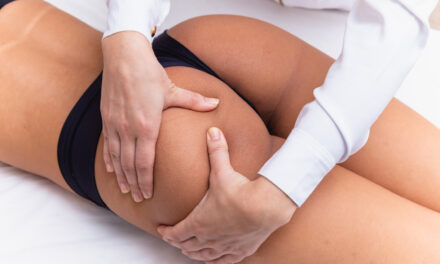
ASPS’s buttock augmentation page says a surgeon “may encourage” lymphatic massage from a licensed massage therapist, and Dixit and Wagh say early drainage massage is described as helping clear edema. Treat both as reasonable things to ask about, with timing set by your surgeon, not as proven requirements.
| Recovery aid | What was studied | Size and design | Why it cannot settle the question |
|---|---|---|---|
| Compression binder | Abdominoplasty patients, seroma and swelling (2024 review) | Five prospective trials, about 130 patients in total | Not liposuction; low-quality, varied studies; authors call the evidence weak |
| Silicone-strip garment | Lipoabdominoplasty and lower-limb liposuction, 2026 | 52 women, one center, each patient her own comparison | No blinding; patent held with first author; about two months of follow-up |
| Ultrasound plus lymphatic drainage | Fibrosis after liposuction, 2014 | 18 women, 12 sessions | Abstract describes no control group; small sample |
| Lymphatic tape | Flank swelling, bruising and pain, 2023 | 52 patients, taped flank versus untaped flank | Small, short follow-up, subjective scoring, breast fat grafting also done |
| Lymphatic massage generally | Cosmetic procedures, 2023 literature review | Narrative review, level of evidence 5 | Summarizes opinion and indirect evidence, not a liposuction trial |
A stage-by-stage liposuction recovery timeline
Dates mislead; stages hold up better in liposuction recovery. The table below strings together the ranges in the sources used for this article, and the sections after it explain what each stage involves. The ranges overlap on purpose, and where your surgeon’s schedule differs, the surgeon’s schedule wins.
| Stage | Common changes | Practical limits | Planning issue | Red flag |
|---|---|---|---|---|
| Days 0 to 3 | Soreness, tiredness, building swelling, early bruising; garment and dressings on | Mostly rest with short walks; activity significantly limited in week one (ASPS) | Ride home, an adult nearby, prescriptions filled, supplies in reach | Chest pain, trouble breathing or fainting: emergency care. Fever or leaking blood or fluid: same-day call |
| Days 4 to 7 | Bruising nearing its peak; fluid pockets (seromas) typically noticed around days 5 to 7 | Activity still limited; garment as directed | First follow-up visit; ask who examines the area | Severe or worsening pain or swelling, fever, spreading redness |
| Weeks 2 to 3 | Feeling better; bruises fading; swelling may turn firm | Return to work possible depending on the job; exercise still limited | Work plan, garment fatigue, a second garment if needed | Rising pain, cloudy drainage, fever |
| Weeks 4 to 6 | Bruising gone and swelling subsiding (ASPS); shape more visible | Garment often ends or tapers; strenuous exercise about a month out, if cleared | Training restart plan; first progress photos | A hot, red, tender patch; dark or blistered skin |
| Months 2 to 3 | Hard areas soften; tissue feels pliant by about three months (2013 review); sensation still changing | Gradual return to full activity as cleared | Dated photos at consistent angles; hold off on judging | A firm lump that grows, or pain that returns |
| Months 3 to 12 | Last swelling settles; skin color changes fade; sensation near normal for most by about a year | Sun protection over treated skin | Judge the contour; ask about revision timing, not before about six months | Chest symptoms, or leg swelling with pain, at any stage: urgent care |
The first three weeks, in order
Days 0 to 3: rest, short walks and a garment that stays on
The first 72 hours of liposuction recovery are about rest and circulation. MedlinePlus advises walking as soon as possible after surgery to help prevent blood clots in the legs, and Dixit and Wagh make the same point, noting that early mobilization significantly reduces the risk of deep vein thrombosis. In practice that usually means short walks around the house, not exercise, and your surgeon’s instructions set the amount.
Expect dressings you’d rather not look under, soreness, tiredness and swelling that builds before it fades. Prescribed medicine usually controls early pain, and it has planning consequences for driving, covered below. The ASPS recovery timeline asks you to significantly limit activity in week one and doesn’t place the “feeling much better” stage until weeks two to three.
Days 4 to 21: the bruise peak and the first better-feeling days
Bruising reaches its worst around days 7 to 10 (Dixit and Wagh), which is often when people take their first careful look at the area and worry. The same review says localized seromas are usually noticed around days 5 to 7, so that window is a sensible time to have the area examined instead of guessing. The FAQ below explains what a seroma is.
By weeks two to three, most sources describe liposuction recovery turning a corner. Cleveland Clinic puts feeling like yourself at about two weeks, and the ASPS timeline says you start to feel much better in weeks two to three and may return to work, depending on your job. Swelling hasn’t gone anywhere, though. Dixit and Wagh describe it turning firm in this window, which is a described part of healing, although anything lopsided, hot or increasingly painful deserves a call.

Weeks 4 to 12, when shape starts to show
Firm, uneven areas and when hardness is expected
Dixit and Wagh describe treated tissue as woody at two to three weeks, consistently softer by six to eight weeks, and back to a normal, pliant feel by about three months. They also name fibrosis as one cause of surface irregularities and list treatments for stubborn cases, which are a surgeon’s call, not a home project.
That timeline is why a hands-on verdict in this window is unreliable: a firm patch at five weeks is a different finding from a firm patch at six months. Photograph it, mention it at the next visit and let the surgeon examine it. The 2014 trial described earlier treated persistent fibrosis with supervised sessions, which is a reminder that the evidence comes from clinic-based care.
Visible improvement and the end of the garment
MedlinePlus says your new shape begins to emerge in the first couple of weeks and improvement becomes more visible at four to six weeks. The ASPS timeline agrees: bruising should be gone and swelling should start to subside in weeks four and five, then keep improving from week six. Given the garment ranges above, wear commonly ends somewhere in this window, depending on the surgeon.
Use this stage of liposuction recovery to take stock rather than to judge. Note which areas are improving, which aren’t, and what the surgeon says at the visit around this point. Those notes become the baseline for the six-month conversation about whether anything needs a second look.
Judging the final contour after liposuction
Final contour is the least predictable stage of liposuction recovery because body, skin and surgical plan all show up in it at once. Published sources place it anywhere from one month to six months out, and some changes continue for a year.
Months three to twelve: what “final” means
Why an early measurement and a later one can disagree
Early snapshots can flatter or mislead. ASPS patient material places final results one to three months out in a 2019 article and several months out on its results page. Cleveland Clinic says three to six months. Dixit and Wagh advise waiting at least six months before planning revision for contour problems, so swelling has time to settle.
The practical lesson for liposuction recovery is to judge at consistent, later time points. A one-week photo or measurement may say more about fluid than about fat, and a tape measure can disagree with a scan or a mirror. Ask the practice which time points it uses for follow-up photos and when it considers a result settled. The viewing skills are covered in how to read liposuction before-and-after photos.
Skin retraction and when loose skin becomes a separate question
Liposuction removes fat, not skin, so what the skin does afterward shapes the contour. ASPS says firm, elastic skin tends to give better results, and that soft, thin skin from stretch marks, weight loss or aging may not reshape as well and may need additional surgery. Its results page adds that lax skin tone can’t be improved by liposuction alone.
Timing matters here too. Dixit and Wagh advise patients with residual laxity to wait at least six months to a year before considering further surgery, so the skin has time to retract. If the question becomes fat versus skin, liposuction versus tummy tuck compares the options, and liposuction revision covers corrections for dents, leftover fat and asymmetry.
Slow-changing details at the one-year mark
Skin color changes and sun protection
Some people notice darker patches during liposuction recovery where bruising was heavy. ASPS lists irregular pigmentation among liposuction risks, and Dixit and Wagh say effective sunscreen should be used and unnecessary sun exposure avoided over treated areas. They report that in all cases the hyperpigmentation usually disappears by the end of a year. Ask when sun exposure on the area is acceptable and what to put on healing incisions.
Numbness and tingling over the first year of liposuction recovery
Mayo Clinic says numbness may be temporary or permanent, ASPS says changes in skin sensation may persist, and Dixit and Wagh say sensation generally returns to near normal by the end of a year, while noting that long-standing heightened sensitivity has been reported after ultrasound-assisted liposuction. So the honest answer to whether numbness will go away is usually mostly, and not always.
For planning, expect the sensation to keep changing for months, not to be fixed at its day-three state. If numbness or tingling is getting worse instead of better, raise it at a follow-up visit instead of waiting for the one-year mark.
Work, driving, exercise and travel during liposuction recovery
Return-to-life questions in liposuction recovery show the widest gaps between sources and between patients. The table gathers what the sources opened for this article say, what moves each answer, and what to ask before you commit to a date.
| Activity | What published sources describe | What changes it | Clearance note |
|---|---|---|---|
| Desk or light work | A few days (Mayo Clinic, Cleveland Clinic, ASPS 2019); up to a week (ASPS 2016); weeks 2 to 3 (ASPS recovery page) | Job demands, areas treated, pain medicine, sitting comfort in the garment | Ask for a minimum, a likely range and a trigger to extend |
| Physical or lifting work | No separate range in the sources opened; ASPS says return depends on your job | Lifting load, hours on your feet, areas treated | Request a written lifting restriction and a review date |
| Driving | No day count in the sources opened; CDC notes opioids can cause sedation and dizziness even as directed | Pain medicine, comfort turning and braking, a clear head | Wait for surgeon clearance; never drive while sedated |
| Walking | As soon as possible after surgery (MedlinePlus); simple walking soon after (ASPS 2019) | Pain, fatigue, drains | Short and frequent; the surgeon sets the amount |
| Strenuous exercise | About a month (MedlinePlus); up to six weeks (Cleveland Clinic); gentle exercise from week 6 (ASPS) | Volume treated, areas, swelling, garment status | Wait for clearance; report next-day swelling or soreness |
| Flights and long trips | CDC lists surgery within 3 months as a clot risk factor for trips over 4 hours | Trip length, other clot risk factors, care near the destination | Ask before booking; plan stops to walk |
| Garment and skin care | A few to several weeks (Mayo, Cleveland); to week 4 (ASPS 2019); 4 to 6 weeks, longer with lax skin (2013 review) | Fit, skin quality, area treated | Follow the written schedule; ask about a second garment |
Work and driving
Why “a few days” and “three weeks” can both be right
Mayo Clinic and Cleveland Clinic both say a few days before returning to work. An ASPS author in 2016 recommended up to a week off, a 2019 ASPS article says you should be comfortable enough to return within a few days, and the ASPS recovery page places return in weeks two to three, depending on your job. Those aren’t contradictions so much as different jobs: a few small areas on a desk worker and a large-volume treatment on someone who lifts for a living are different recoveries.
Ask for a plan, not just a date. A useful plan names a minimum, a likely range and a trigger for extending, such as still needing sedating pain medicine or being unable to sit comfortably in the garment. Leave policies, paperwork and help at home are covered in plastic surgery recovery planning.
Driving, pain medicine and the first solo errand
None of the sources opened for this article gives a day count for driving after liposuction, and inventing one would be a mistake. What they do establish is the constraint. CDC says opioid pain medicine can cause sedation and dizziness even when taken as directed, and that combining it with alcohol or other drowsiness-causing drugs, such as some sleep aids and muscle relaxants, is very dangerous.
A sensible question for the surgeon is therefore three-part: are you cleared, is anything sedating still in your system, and can you turn, brake and react without pain or restriction? Arrange rides to the first appointments instead of treating them as a test of readiness.
Exercise, trips and sleep
Walking first, training later in liposuction recovery
The sources line up better on exercise than on anything else. Walking starts almost at once (MedlinePlus, ASPS 2019). Strenuous exercise waits about a month (MedlinePlus) or up to six weeks (Cleveland Clinic), and the ASPS timeline allows gentle exercise from week six. ASPS also says incisions shouldn’t be subjected to excessive force, swelling, abrasion or motion while they heal, which is the logic behind holding back on hard training.
A workable reading of those liposuction recovery ranges: walking begins immediately; light, low-impact activity is a conversation for the first follow-up visits; and hard training, heavy lifting and high-impact work are a conversation after about a month, with some surgeons preferring longer. Cleared doesn’t mean ready. Add load gradually and treat next-day swelling or soreness as information to share with the surgeon.
Flights, road trips and sleeping in a garment
CDC says anyone traveling more than four hours by air, car, bus or train can be at risk for blood clots, lists recent surgery within three months as a risk factor, and recommends moving your legs frequently and exercising your calf muscles. It adds that some people benefit from graduated compression stockings and that anyone with extra clot risk should talk to a doctor before traveling. Bring a flight or long drive up at the consultation, before you book.
Sleep is a gap in the sources. None of those opened gives liposuction-specific guidance on positions, which usually depends on the area treated and whether fat was grafted. ASPS’s buttock augmentation page, for instance, advises fat-transfer patients to sleep face down or on their side. Ask about positions, bedding and whether the garment stays on at night, and get the answers in writing.
When liposuction recovery stops being routine
Most of liposuction recovery is uncomfortable but expected. A short list of findings isn’t. This section sorts findings into three bins, routine, call today and call 911, without turning every twinge into a crisis.
Routine, call today, call 911
Same-day calls to the surgeon’s office
CDC lists redness and pain around the surgical site, cloudy fluid draining from the wound and fever as signs of a surgical site infection and says to call your provider immediately. Cleveland Clinic’s list adds long-lasting or severe pain or swelling, and fluid or blood leaking from the surgical site. Dixit and Wagh describe a fulminant infection that progresses rapidly to blue-tinged skin, blisters and, in the worst cases, gangrene.
The last items on that list come from a different source. FDA’s lidocaine label names lightheadedness, confusion, dizziness, drowsiness, ringing in the ears and blurred or double vision as early signs of systemic toxicity, and calls drowsiness usually an early sign of a high blood level. An ASPS author notes that the fluid used in liposuction contains lidocaine, and Mayo Clinic lists lidocaine toxicity among the rarer serious risks. Rare, but worth a call.

Emergencies: chest, breathing and leg signs
Some findings aren’t for a phone tree. CDC says the symptoms of a pulmonary embolism, a clot that has traveled to the lungs, include trouble breathing, chest pain that often worsens with deep breaths or coughing, a racing or irregular heartbeat, coughing that may bring up blood, and lightheadedness or fainting, and that anyone with them should seek medical help immediately. Mayo Clinic calls fat embolism a medical emergency, and MedlinePlus describes it as fat globules in the bloodstream that block blood flow.
In a leg, CDC lists swelling, pain or tenderness, warmth and redness or discoloration as signs of a deep vein clot and says to see a doctor as soon as possible. About half of people with a clot have no symptoms at all, so a quiet leg isn’t proof of anything. For chest pain, trouble breathing or fainting, call 911 or go to the nearest emergency department, and don’t drive yourself.
Follow-up, revision timing and what to ask
What good follow-up looks like for liposuction recovery
Mayo Clinic notes that a follow-up visit is needed and that your surgeon may call to check on healing. Ask what the schedule is. A schedule that matches the stages above would include an early visit in the first week or so, when bruising peaks and seromas tend to appear, a check around the time the garment ends, and one or two later visits to assess contour, with dated photos at each.
If contour concerns persist at six months, the options run from continued watching to nonsurgical and surgical corrections. Ask now what the practice’s revision policy is, and whether fees for a second procedure, including facility and anesthesia, are covered or billed separately; how liposuction pricing works explains how to compare. A practice that answers these in writing is easier to evaluate, and how to verify a plastic surgeon covers credentials and the facility.
Eight questions to settle before the surgery date
- How many hours a day and for how many weeks will I wear the garment, and do I need a second one?
- Will I have drains or open incisions, and who changes the dressings?
- Which follow-up visits are scheduled, and when is the first?
- When may I walk more, drive, return to desk work, return to physical work and exercise?
- Do you recommend lymphatic massage, and if so when to start and who should do it?
- Which symptoms should I call about, is the after-hours number answered, and what should I do if no one picks up?
- When do you judge the result, and how do you approach contour irregularities or loose skin?
- What would a revision cost, and what does your policy cover?
Frequently asked questions
Does swelling ever get worse before it gets better during liposuction recovery?
It can look that way. Dixit and Wagh describe bruising peaking around days 7 to 10 and swelling turning firm in weeks two to three, and the 2026 ultrasound study described earlier found fat-layer thickness partly rebounding between week one and month one before settling by six months. Those are patterns in published reports on liposuction recovery, not a forecast for any one person. What separates a normal bad day from a problem is the company it keeps: swelling with fever, spreading redness, severe pain or drainage is a reason to call the same day.
What is a seroma, and will I need it drained?
A seroma is a pocket of fluid that collects under the skin where tissue was disturbed. Mayo Clinic lists seromas among liposuction risks and says they may need draining. Dixit and Wagh say localized seromas are usually noticed around days 5 to 7 and that extra padding under the garment often helps them settle in 7 to 10 days. Don’t try to drain or press on a suspected fluid pocket yourself. Describe it to the surgeon’s office and ask how the practice handles checks and drainage.
When should I start taking progress photos during liposuction recovery, and how?
Start before surgery, then repeat at checkpoints that match the stages above: around two weeks, six weeks, three months, six months and a year. Use the same room, light, distance, posture and time of day, with the garment off and the same clothing or none, and keep the images private. Early photos mostly document swelling; later ones show contour. Bring them to follow-up visits so the conversation is about change over time instead of memory.
If I gain weight after the swelling settles, does my liposuction recovery result change?
ASPS says liposuction results are long lasting provided you maintain a stable weight, and Mayo Clinic says weight gain may add fat in areas you didn’t have treated, such as the abdomen. Neither source frames this as a recovery issue, but it affects how you read your six-month and one-year contour, because a change in weight can look like a change in surgical result. Record your weight alongside dated photos, and tell the surgeon about any large change before a revision discussion.
I’m traveling for surgery. How should I plan liposuction recovery in a hotel?
CDC’s medical tourism guidance says flying after surgery can raise the risk of blood clots, including deep vein thrombosis, and advises delaying air travel for 10 to 14 days after major surgeries, particularly those involving the chest. Whether that applies to your operation is the surgeon’s call, so ask for a written earliest-flight date before booking. CDC also warns that travelers may need health care in the United States if complications develop, and that follow-up care can be expensive and may not be covered. See medical tourism for plastic surgery before deciding.
Are home massage tools or rollers a good idea for firm spots?
The studies described earlier used supervised care, not consumer devices: therapeutic ultrasound and manual lymphatic drainage over 12 sessions in a 2014 trial, and tape applied by clinicians in a 2023 pilot. None of the sources opened for this article evaluates handheld devices or rollers after liposuction. Because the right approach may depend on what is under the skin, such as a fluid pocket or firm fibrotic tissue, ask your surgeon which techniques, if any, are appropriate, when to start, and who should perform them.
Does this liposuction recovery timeline still apply if liposuction is combined with a tummy tuck or fat transfer?
Treat it as a starting point only. ASPS says liposuction can be done alone or with procedures such as a facelift, breast reduction or tummy tuck, and Mayo Clinic notes that risk increases with larger areas or multiple procedures in one operation. Added operations bring their own restrictions: ASPS’s buttock augmentation page asks fat-transfer patients to avoid prolonged sitting for about two weeks and describes exercise as generally resuming after six to eight weeks. Ask for one combined schedule, and see tummy tuck and BBL surgery recovery for those operations.
Sources and further reading
- American Society of Plastic Surgeons — Liposuction recovery (accessed 2026-11-12) — week-by-week outline, garment, drains, work and exercise
- American Society of Plastic Surgeons — Liposuction safety (accessed 2026-11-12) — listed risks, large-volume note
- American Society of Plastic Surgeons — Liposuction (accessed 2026-11-12) — skin quality, combined procedures
- American Society of Plastic Surgeons — Liposuction results (accessed 2026-11-12) — swelling duration, stable weight, lax skin
- ASPS blog, Martin S — What to expect after liposuction (2019; accessed 2026-11-12) — garment to week four, early walking, work, results timing
- ASPS blog, Horton K — Liposuction: tell me all about it (2016; accessed 2026-11-12) — swelling, bruising, work, numbness, wetting solution
- American Society of Plastic Surgeons — Recovery after surgery, buttock augmentation (accessed 2026-11-12) — garment, sitting, lymphatic massage, fat-transfer exercise timing
- Mayo Clinic — Liposuction (accessed 2026-11-12) — monitoring, drains, garments, risks, emergencies
- MedlinePlus — Liposuction, reviewed May 2025 (accessed 2026-11-12) — bandages, walking, exercise, outlook
- Cleveland Clinic — Liposuction, updated October 2022 (accessed 2026-11-12) — swelling duration, work, exercise, when to call
- CDC — About blood clots, reviewed March 2025 (accessed 2026-11-12) — DVT and PE symptoms and urgency
- CDC — Blood clots and travel, reviewed May 2024 (accessed 2026-11-12) — trips over four hours, recent surgery
- CDC — About surgical site infections, reviewed April 2024 (accessed 2026-11-12) — infection signs
- CDC — Prescription opioids, reviewed June 2025 (accessed 2026-11-12) — sedation, dangerous combinations
- CDC Travelers’ Health — Medical tourism (accessed 2026-11-12) — flying after surgery, care after returning
- U.S. Food and Drug Administration — Xylocaine (lidocaine HCl) injection label, revised 2018 (accessed 2026-11-12) — early signs of systemic toxicity; label may not be the latest version
- Dixit VV, Wagh MS — Unfavourable outcomes of liposuction and their management, Indian J Plast Surg 2013 (accessed 2026-11-12) — expert review: garments, seroma, bruising, firmness, pigment, sensation, timing of revision
- Masson IFB et al. — Manual lymphatic drainage and therapeutic ultrasound after liposuction and lipoabdominoplasty, Indian J Plast Surg 2014 (accessed 2026-11-12) — small uncontrolled-abstract trial
- Zingaretti N et al. — Kinesio taping for edema, ecchymosis and pain after liposuction, Aesthet Surg J 2023 (accessed 2026-11-12) — 52-patient pilot, flank comparison
- Arkoubi AY — Effect of compression garments on post-abdominoplasty outcomes: a systematic review, JPRAS Open 2024 (accessed 2026-11-12) — weak evidence for binders
- Mojallal A et al. — A novel compression garment with a dynamic external lymphatic drainage system, Aesthet Surg J Open Forum 2026 (accessed 2026-11-12) — design, limits, patent disclosure
- Sudha S et al. — Ultrasonographic quantification of reduction in subcutaneous fat thickness following large-volume liposuction, Cureus 2026 (abstract read 2026-11-12) — fat-thickness time course, waist circumference, fluid collections
- Aesthetic Surgery Journal Open Forum — The utility of lymphatic massage in cosmetic procedures, 2023 (DOAJ record, accessed 2026-11-12) — literature review, level of evidence 5